Blog
Why We Built Sherwood on the Robinhood Chain
Fair rewards, community ownership, and burning SHW as data credits. The DePIN thesis behind the People's Network.
Fair rewards, community ownership, and burning SHW as data credits. The DePIN thesis behind the People's Network.
When we set out to build Sherwood, we made one decision before any other: the network had to belong to the people who build it. Everything else — the hotspots, the software, the token — followed from that single choice.
Most networks pay their builders last, if at all. On the Robinhood Chain, reward math is public, auditable, and programmable. Hotspots earn SHW for real coverage delivered — bytes moved, not promises made. Every deployer knows exactly what their hotspot earned and why, and settlements are verifiable on-chain by anyone.
That fairness is the point. When the rules are visible to everyone, the network grows in the places it's needed most, because builders can see the opportunity before they plant a single hotspot.
There is no reserve controlled by insiders, no treasury that can quietly change hands. The Sherwood Network is owned by its deployers, subscribers, and builders. SHW represents a stake in the coverage itself — and because the supply mechanics live on-chain, ownership can't be diluted by a backroom decision.
"A network owned by the people who build it doesn't need permission to grow. It just needs fair rules — and a chain that enforces them." — Sherwood Labs
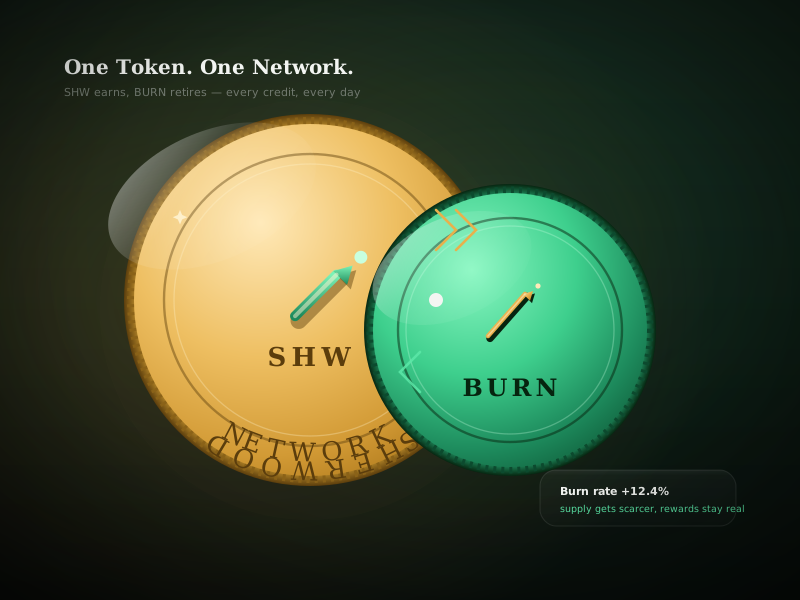
Every byte that moves across the Sherwood Network is paid for in data credits. Those credits are burned — permanently removed from supply — as they're used. The more the network is used, the scarcer SHW becomes. It's a simple loop: usage creates value, and that value flows back to the people who made the usage possible.
Carriers offloading traffic, IoT sensors reporting readings, a city keeping its residents connected — every one of those transactions burns SHW. That's what makes SHW a currency for connectivity instead of a token about connectivity.
DePIN — decentralized physical infrastructure — sounds like jargon, but the idea is simple. Communities can build physical networks faster and cheaper than any incumbent, because the people who live and work in a place know exactly where coverage is missing, and they're already paying for the internet it rides on.
Sherwood is DePIN in its purest form: 1,210,548 hotspots across 82 countries, owned by hundreds of thousands of people, carrying 3.4 TB of real traffic every day. No tower crew, no spectrum auction, no ten-year buildout. Just people, Wi-Fi, and a chain that pays them fairly.
SHW is prelaunch. The contract address will be published here the moment the token goes live on Pons V2 — until then, the forest keeps growing, because the network was built to work long before the token ever trades.
Join the waitlist and be first in line for SHW, the currency for connectivity on the Robinhood Chain.